

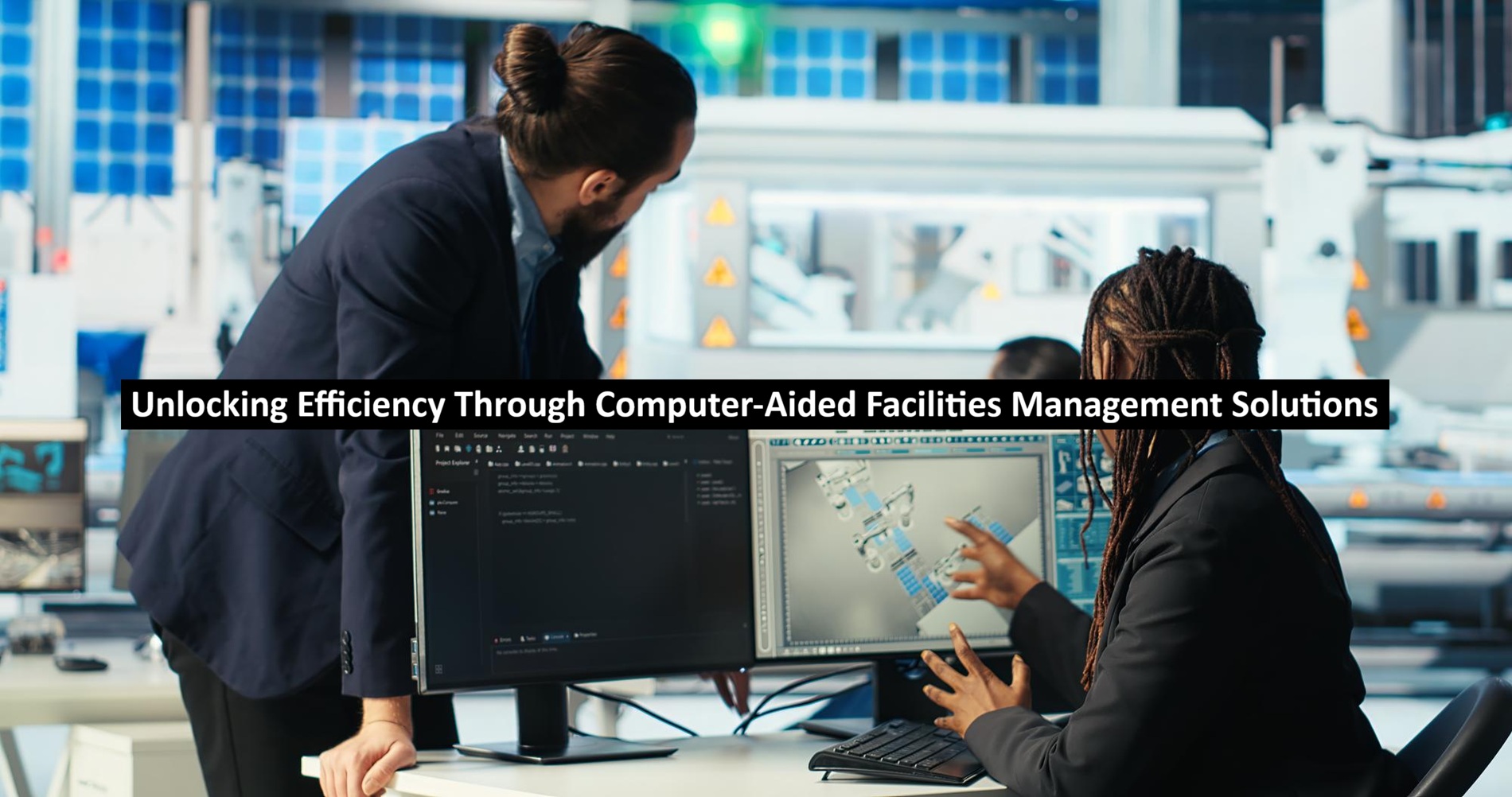
In the majority of the facilities, maintenance is like a day-by-day battle to keep things going. Maintenance crews leap among paper surveys, overflowing spreadsheets, and indefinite email conversations. Equipment breakdowns occur when they are least expected, the time to meet a certain compliance deadline creep up without warning, and the decision on space utilization is made most of the time on guesses and not enlightening insight.
In the current environment, which values every line on the budget and hybrid work is transforming the use of buildings, this reactive approach does not stand the test. Manual processes are a waste of both time and money, and the data are far between, which makes it almost impossible to be strategic in decision-making.
Computer-Aided Facilities Management (CAFM) comes in at this point. It is not just software, but it is the underlying digital foundation that makes the process of facility management to be more of an operation of data-driven scramble rather than a proactive one.

What Is Computer-Aided Facilities Management (CAFM)?
At its simplest, CAFM is the digitization of facility operations. But describing it merely as “software” undersells its value. It acts as a centralized command center that replaces error-prone manual tracking with a streamlined digital interface.
Instead of relying on institutional memory (what happens when your head engineer retires?), CAFM captures and operationalizes data through:
- Asset Registers: This is a comprehensive digital record of the location, condition and warranty of each piece of equipment, including elevators and lighting systems.
- Space Data: Visual aids that overlay floor plans and occupancy to be sure that not a single square foot of real estate is ignored.
- The Automation Factor: CAFM is not a static spreadsheet as other spreadsheets. It will automatically build Planned Preventative Maintenance (PPM) programs, allocate work tickets to appropriate technicians, and create reports on compliance without human interventions.
Read: Future-Ready Healthcare: EMR Software Powering Advanced Radiology Image Acquisition
The Efficiency Challenge in Facility Management
Why is the transition to CAFM urgent? Because the traditional “pen and paper” or Excel-based methods create invisible drains on resources.
Data Silos and “Spreadsheet Fatigue”
When the maintenance records are in a different file, the financial records are in another file, and the vendor contract is in a different drawer; the managers will not have the real time view which they require to make quick decisions. What you cannot see cannot be optimized.
The “Run-to-Failure” Trap
In the absence of automatic schedules, the maintenance will tend to reduce its reactive maintenance. The costliest method of operating a facility is to wait until a critical asset goes down. It causes higher emergency repair premiums, shipping cost to receive parts overnight, and a lot of downtime to the operations.
Invisible Waste
- Space: With no correct information, the question of whether a building is underutilized cannot be answered, and hence costs of heating and cooling rooms that are not used will be incurred.
- Energy: With no visibility on consumption patterns, there are financial blind spots, leading to huge utility payments and a lack of achievement of the ESG (Environmental, Social, and Governance) objectives.
- CAPEX vs. OPEX: In the absence of historical data describing the performance of assets, it is not easy to define the difference between the costs that are needed to run the company and the time when a capital investment should be made to bring out the old equipment.
How CAFM Solutions Unlock Operational Efficiency
Implementing a CAFM solution does not just organize data; it changes the operational rhythm of a facility.
Creating a Single Source of Truth
CAFM consolidates compliance documents, floor plans, and maintenance schedules into a Unified Data platform. This establishes Real-Time Visibility, and all the upper management is in agreement with the engineer on the ground. A technician can view the entire history, manuals, and safety measures of an asset instantly once a work order has been opened.
Shifting to Predictive Maintenance
The most immediate ROI comes from moving away from reactive repairs.
- PPM Automation: The system automatically triggers work orders based on manufacturer recommendations or time intervals.
- IoT Integration: More complex CAFM systems use sensors to identify anomalies such as the vibration of a motor or an increase in heat in a server room and raise a work order before it starts to fail.
- The Result: Studies have shown that this method can save 50 percent in time lost in breakdown of equipment.
Space and Resource Optimization
Using interactive floor plans and utilization analytics, managers can identify wasted space. If a conference room is rarely used, CAFM data highlights it, allowing for repurposing. It also streamlines conflict resolution by managing room reservations to prevent double-booking.
Automating Administration
CAFM removes the administrative burden of compliance. The system automates the task of generating reports and has a digital audit trail instead of manually bringing together data to create an audit. This makes facility managers able to concentrate on strategic initiatives but not on paperwork.
Integration with Emerging Technologies
The present-day CAFM solutions are not islanded; they are set to fit into the overall technology ecosystem.
IoT: The Nervous System
The building is able to have a nervous system by installing sensors all over a facility, which monitors the vital signs of the building. This is what feeds the CAFM with continuous data and thus allows the building to predict its own maintenance; that is, the building knows what it requires.
BIM: The Digital Twin
The Building Information Modeling (BIM) converts the 2D plans to 3D virtual space of facility management.
- Virtual Walkthroughs: Technicians are able to see the position of equipment behind the walls or above ceilings even before they step on the ground thus cutting down on repair time greatly.
- Data Richness: BIM incorporates the rich architectural data in the maintenance process itself.
AI and Predictive Analytics
Raw data is turned into foresight with Artificial Intelligence. Through historical weather patterns and usage, AI algorithms are able to predict in advance what maintenance to perform. They also have the option of optimizing the scheduling, and in this case, the technicians can be routed based on priority and location to reduce the time spent on travelling.
ERP & BAS Integration
Essentially, tying CAFM to Enterprise Resource Planning (ERP) systems means that the maintenance implementation is synchronized with financial planning. Equally, it can be combined with Building Automation Systems (BAS) to ensure that the energy control strategies are aligned with the maintenance activities.
Real-World Benefits of Implementing CAFM
The adoption of platforms like Cryotos and similar CAFM solutions translates directly to the bottom line.
- Significant Cost Reduction: Organizations can cut expenses by examining patterns of spending. By itself, predictive maintenance can help save up to 30 in maintenance costs.
- Extended Asset Lifespan: Long life of equipment by not using a run to failure approach, enhances the capital worth of equipment, which extends the equipment life by 20-40 years.
- Operational Efficiency: Automation of work processes eliminates bottlenecks, and the right person receives the right information at the right time.
- Revenue Protection: Real estate is often an organization’s second-largest expense. Identifying underutilized areas allows companies to optimize their footprint and potentially reduce leased square footage.
Conclusion
Computer-Aided Facilities Management does not only involve the database but rather is a driving force that is making the Facility Management change into a source of value rather than a cost center.
Eliminating data silos, automating routine and implementing future-focused technologies such as IoT and artificial intelligence, Computer-Aided Facilities Management can help organizations to cease striving to keep the lights on and begin to streamline to the future. The question is no longer whether you can afford to implement a CAFM solution, but whether you can afford not to.