

It is projected that soon, AI will facilitate 95% of all customer interactions.That means most of the conversations between brands and their audiences will take place through websites, applications, and digital platforms.
This change is happening rapidly, thus forcing marketers to think in new ways.
New technologies such as artificial intelligence are changing the old rules. Customers have higher expectations: they want the content that speaks to them directly; they want quick answers; and they want smooth, personalized experiences every time they interact with a brand.
Thus, marketers need to integrate the newly evolved efficient technologies and strategies into their campaigns since no single solution will work on an audience for long. In this article, we shall explore the core competencies a marketer will need in 2026 to work within this environment.
1. Essential Skills to Master in 2026
As we discussed , the digital marketing landscape is rapidly evolving, and in order to stay ahead in 2026, mastering certain key skills becomes a must.
While technology and consumer behaviors continue to shift, the challenges remain the same: how do you engage with your audience effectively and create impact?
- Data Storytelling:
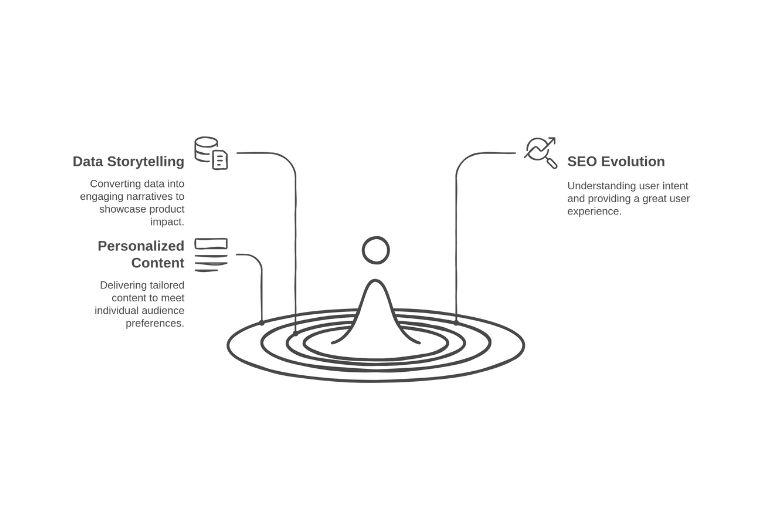
Data storytelling is a tool for converting raw data into a story that showcases the positive impact of a product or service on its customers. Thus, amid an enormous amount of data, the challenge is not merely to collect the data but to draw insights from it that matter to the audience.
Imagine a SaaS company with a project management software offering. The marketing team probably has a large amount of data showcasing the amount of time users save after switching to the platform. How does one translate that data into thrilling market stories?
You could tell a story based on the statistic rather than simply stating, “Our users save 10 hours per week.”
For example: “With our software, a project manager at a fast-growing tech firm was able to reclaim 10 hours every week, which they then used to accelerate product development and improve team collaboration.”
Now, this puts something on paper that speaks to the heart of the potential customers’ pain points more time and more efficiency.
To do this, there are some tools like Tableau or Power BI that can assist in breaking down all the information and presenting it in a simple manner. This way you will make your marketing more engaging and relatable and, therefore, more successful. - SEO’s Evolution:
SEO is no longer about packing your pages with keywords; today, SEO entails understanding user intent and providing a great user experience. This shift is very important because Google and other search engines promote websites that are really able to meet the needs of users.
For a SaaS-based company, SEO, in other words, should understand the issues that concern your end customers and create content that solves their needs.
For instance, let’s take an example: your SaaS product deals specifically with the automation of email marketing for businesses.
Rather than hoping to rank for “email marketing automation,” you should target lucrative search queries, such as “how to save time with email automation” or “best tools for email marketing automation for small businesses”.
This way, you will be addressing the precise intentions of your potential audience.
On the same note, when you incorporate all Google’s E-E-A-T elements, which include Experience, Expertise, Authority, and Trust, you not only get better ranking, but also more consumer trust.
Content that is relevant, of high quality and optimized for mobile devices will ensure the users remain interested and continue to explore your product. - Personalized Content:
Generic messages no longer satisfy audiences. They are expecting experiences that suit their different preferences.
The consumers of today need to feel understood by brands that they interact with.
They want content that has been directed to their needs, preferences, and behaviors.
Most of the brands have still stuck to their style of a one-size-fits-all messaging approach, which in turn ends up losing a deep connection with their audiences.
This is mostly true, especially for the SaaS industry customers who have their unique use cases concerning your product in terms of the type of business, size, or goals. Not providing this content to those users means you may be losing them to a competitor.
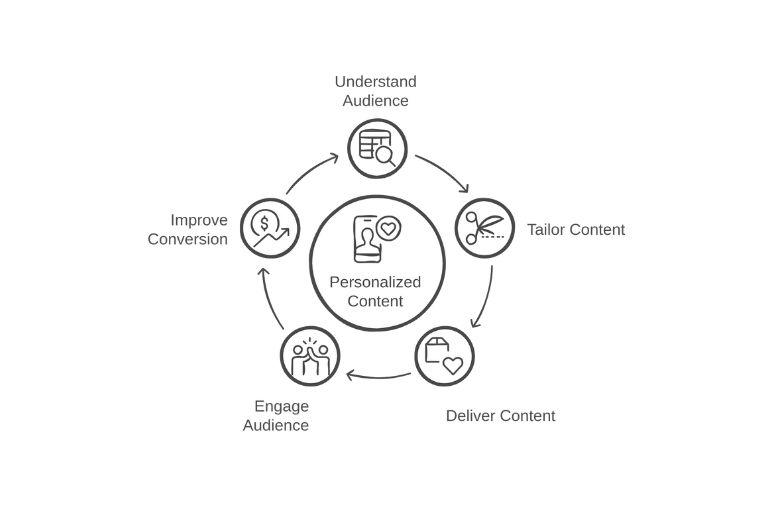
Web personalization platforms come into play here. These tools allow you to deliver real-time, dynamic content tailored for each visitor based on their past interactions, behavior, and preferences.
For example, if someone visits your website looking for a specific feature, say, a CRM tool for small businesses, then the next time they land on your site, they may be shown content that deals specifically with how your CRM can help small businesses grow.
This personalized engagement not only aids in user engagement but also improves conversion rates by having a message that specifically resonates with that particular visitor’s demands.
Marketers can use personalization tools to build relevant and engaging experiences for their audience, ensuring that, rather than just reaching out to people, the marketing effort connects with them deeply.
Read: How to Stop USB Devices from Spreading Viruses on your Computer
2. Tools and Strategies for Success

- Generative AI for Marketers
Generative AI is probably among the most enthralling developments in the marketing world. Tools like ChatGPT, DALL·E, and MidJourney have taken content generation for marketers by storm.
Whether marketers want to write blog posts, design visuals, or personalize customer interactions; AI is making it easier, quicker and shorter to create a piece of content and distribute it.
For instance, let us assume you are managing a SaaS firm that offers cloud storage services. You can use generative AI to generate emails that are specific to the customer needs based on the usage like “5 ways to better utilize your storage space” to the user who is almost out of space.
This way, the time is saved for more important things and the customer receives more relevant and timely content. - Automation
Automation makes things so much easier for marketers who are scaling up but want to avoid burnout. Unfortunately, this is the reality for a considerable majority of marketers now, as all they do all the time is engage in very tedious, manual activities like managing email, segmentation, tracking customer journeys, and analyzing customer data.
And this often leads to bottlenecks and even missed opportunities.
That’s where automation tools shine. Using these platforms, marketers can create complicated workflows without having to become tech-savvy.
For instance, an automation tool can send a welcome email to a lead that signed up for your SaaS product, add that lead to your CRM, and assign a sales rep to follow up-all automatically.
In managing a SaaS or any type of service business, automated tools come to the rescue for repetitive chores such as onboarding, upselling, or follow-up communications.
For example, in some point of use within the software, where the user has crossed the threshold of use, you can set an automation to monitor the events for email prompts that suggest an upgrade or perhaps promote a feature they haven’t used that they find themselves at a specific point in time.
Marketers who wish to save time and work with higher efficiency, as well as do away with errors, should implement automated marketing platforms.
Doing away with their manual work, would let them unlock more time for creative brainstorming, and allow them time to be creative and strategic without compromising a smooth, personalized experience for their customers. - Interactive Content
Interactive content is changing the directions of interaction between marketers and their audience. Like we discussed earlier, web personalization platforms help deliver tailor-crafted content. But interactive content takes this a few notches higher by directly interacting with users to create an engaging and dynamic experience.
The problem for most marketers is that static content no longer garners attention. Users breeze through content unless it addresses their immediate needs. Therefore, interactive content such as quizzes, surveys, and calculators solve this dilemma by providing a personalized and engaging experience.
For instance, a SaaS company could use an interactive quiz to recommend the best project management tool based on a user’s workflow for a more meaningful interaction.
When combined with web personalization platforms, interactive content achieves its greatest potential. Such platforms allow for real-time personalization when the content the user interacts with reflects their preferences and past interactions.
This helps the experience to feel even more personal and relevant, driving greater engagement and higher conversion rates.
Thus, with the help of interactive content and web personalization, not only the level of users’ engagement will increase, but also the quantity and quality of leads, as well as the connection with the audience, will improve.
In today’s competitive digital landscape, this is a vital method to keep ahead.
Conclusion
In 2026, marketers will have to master key skills best suited for success: the ability to perform data storytelling to turn insights into action; evolving SEO practices focused on user intent and experience; personalizing content for audience engagement and connection; and working smarter and scaling efficiently with AI and automation tools.
The good news is that adaptation to these changes is not a challenge anymore since marketers can leverage various tools that include web personalization and automation.
This way they will be able to remain relevant and at the forefront of change in the world of digital business in 2026 and beyond.
Author’s Bio:
Vidhatanand is the Founder and CEO of Fragmatic, a web personalization platform for B2B businesses. He specializes in advancing AI-driven personalization and is passionate about creating technologies that help businesses deliver meaningful digital experiences.